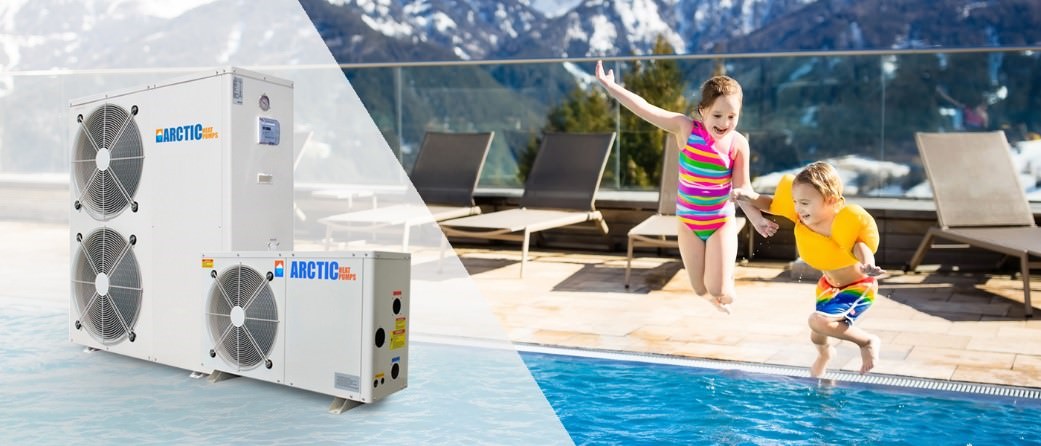
For most pool owners, swimming has always been governed by the weather. You either accept a short season or you accept the bills that come with a gas heater running through spring and autumn. An energy efficient pool heat pump changes that arithmetic. Instead of burning fuel or forcing electricity through a heating element, it extracts ambient heat from the air and transfers it into your water which is why the same pool costs a fraction as much to keep warm.
This guide covers what to look for when choosing one: how COP is measured and what a good figure looks like, how running costs compare against gas and electric resistance, which capacity suits your pool size and climate, and the maintenance that keeps efficiency high over a 15 to 20 year lifespan.
Introduction: Swim Year-Round Without Breaking the Bank
With the winter months fast approaching, swimming usually stops for homeowners who rely on the sun or expensive gas heaters. But in 2026, that’s no longer the case.
Modern Pool Heat Pumps have revolutionized the industry, allowing you to maintain a warm, comfortable pool even when the temperature drops without any high utility bills.
If you are considering an upgrade this year, this guide covers everything you need to know about energy-efficient pool heating, how it lowers your carbon footprint, and which models are leading the market in 2026.
Why Choose a Pool Heat Pump?
- Energy Efficiency: Uses up to 80% less energy than standard electric heaters.
- All-Season Use: Capabilities to heat your pool, extending your swim season into spring and autumn.
- Eco-Friendly: Zero emissions on-site, unlike propane or natural gas heaters.
How Heat Pumps Work: The Science of Savings (COP)
The technology inside a pool heat pump is similar to your refrigerator or air conditioner—but in reverse.
- Capture: A fan pulls in ambient air across an evaporator coil.
- Absorb: The refrigerant inside the coil absorbs the heat from the air and turns into a gas.
- Compress: The compressor squeezes this gas, intensifying the heat.
- Transfer: This super-heated gas passes through a heat exchanger, transferring its heat to your pool water.
Understanding COP (Coefficient of Performance)
Efficiency is measured by COP.
- COP of 1.0: For every 1kW of electricity used, you get 1kW of heat (Standard Electric Heater).
- COP of 6.0: For every 1kW of electricity used, you get 6kW of heat (Arctic Heat Pump).
Bottom Line: A higher COP means lower monthly bills. In 2026, Arctic models are achieving industry-leading COP ratings.
Comparison: Heat Pumps vs. Gas vs. Electric
Is a heat pump right for you? Compare the technologies below:
Feature | Arctic Heat Pump | Gas Heater (Propane/Nat) | Electric Resistance |
|---|---|---|---|
Energy Source
| Electricity + Air | Fossil Fuel | Electricity
|
Efficiency (COP) | High (4.0 – 6.0) | Low (0.80 – 0.95) | Very Low (1.0) |
Operating Cost | Lowest ($50-$100/mo)
| High ($300-$500/mo) | Highest ($600+/mo) |
Speed | Steady & Consistent | Fast Heating | Fast Heating |
Lifespan | 15-20 Years | 5-10 Years | 10-15 Years |
Top Energy-Efficient Pool Heat Pump Models of 2026
To help you choose, here are the top-rated models from Arctic Heat Pumps for 2026. All models use full DC inverter technology and titanium heat exchangers the two features that separate an efficient pool heat pump from a cheap one.
1.Arctic Titanium Heat Pump 060ZA/B (Best for Temperate Climates)
- Capacity: 95,500 BTU / 28 KW
- Best For: Standard pools, hot tubs, and spas.
- Key Feature: Its smart control system allows you to switch between heating and cooling effortlessly. It is the workhorse for families in moderate climates.
2. Arctic Titanium Heat Pump 015ZA/B (Best for Hot/Summer Use)
- Capacity: 23,000 BTU / 6.7 KW
- Best For: Smaller pools or swim spas in hotter regions.
- Key Feature: This unit is a master of cooling. It can achieve output temperatures as low as -4°F (-20°C), making it perfect for cooling down a pool in the scorching summer heat.
- Efficiency: COP range of 3.6 – 13.0 (Incredibly efficient).
3. Arctic Heat Pump 035ZA/B (Cold Climate Specialist)
- Capacity: 29,000 BTU
- Best For: Frigid climates and extended seasons.
- Key Feature: Optimized for colder locations where other pumps freeze up. When sized correctly for your pool, this unit can save you more than 70% on energy costs compared to traditional heating methods.
Maintenance Tips to Maximize Efficiency
Even the best machine needs care. Follow these simple tips to keep your COP high and bills low:
- Check Refrigerant Levels: Ensure your system is charged correctly. Low refrigerant reduces heat absorption capability.
- Clean the Filters & Coils: A dirty air filter or clogged evaporator coil restricts airflow, forcing the fan to work harder and use more electricity.
- Inspect Electrical Connections: Check controls and wires annually for signs of wear or corrosion to prevent efficiency drops.
- Use a Pool Cover: A heat pump adds heat, but a cover keeps it there. Using a solar cover can reduce heat loss by 50%, doubling your system’s effectiveness.
Conclusion
Energy-efficient pool heat pumps are making life more enjoyable for people who want to swim beyond the summer months. While the initial investment in 2026 might be higher than a gas heater, the ROI (Return on Investment) is quick and often pays for itself in savings within 2-3 years.
With advanced models like the Arctic Titanium Series, there’s never been a better time to stop using fossil fuels and invest in a sustainable, cost-effective swimming experience.
Frequently Asked Questions (FAQs)
Do pool heat pumps work in freezing winter weather?
Standard heat pumps work well down to 40°F (4°C). However, Arctic’s Cold Climate Heat Pumps are designed to operate efficiently in much lower temperatures, making them suitable for extending the season into late autumn and early winter.
How much money can I save by switching to a heat pump?
Most homeowners save 60% to 80% on their operating costs compared to propane or natural gas heaters. For an average pool, this can mean saving $1,500 to $2,000 per year.
How long do pool heat pumps last?
With proper maintenance, a high-quality pool heat pump like an Arctic model can last 15 to 20 years, which is nearly double the lifespan of a typical gas heater (5-10 years).