Which Is Most Efficient Heating System for Cold Climates?

Most Efficient Heating System for Cold Climates

When winter temperatures plunge well below freezing, the heating system you choose stops being a comfort decision and becomes a financial one. The most efficient heating system for cold climates can cut your energy bills dramatically, keep every room evenly warm, and slash your carbon footprint, while the wrong choice leaves you with cold spots, sky-high utility costs, and a system straining to keep up.

In this article, I’ll explain the seven most efficient heating systems available to cold-climate homeowners, comparison, why it is essential, how heating systems work, and how to enhance their performance to help you decide and use them with confidence. Let’s not waste any more time and get to the point.

Why an Efficient Heating System Is Essential for Homeowners

In a cold climate, your heating system runs hard for five, six, or even eight months a year. That sustained workload makes efficiency the single biggest lever you have over your home’s operating cost. A high-efficiency system delivers more usable heat from every dollar of fuel or electricity, which translates directly into lower monthly bills across the entire heating season.

Efficiency matters for more than money. An efficient, properly sized system holds a steadier indoor temperature, eliminating the cold corners and overheated rooms that plague older equipment. It runs quieter, lasts longer because it isn’t constantly straining at maximum output, and produces fewer emissions, especially when it draws on electricity instead of combustion.

For anyone drawing up energy-efficient home plans for cold climates, the heating system is the foundation around which everything else is built: get it right, and insulation, windows, and ventilation all work with it rather than against it.

There’s also a resale dimension. Homes with modern, efficient heating, particularly electric systems like heat pumps, increasingly command a premium, and efficiency disclosures at sale are becoming the norm in many markets. The system you install today is an investment that pays back across years of lower bills and a stronger property value.

7 Most Efficient Heating Systems for Cold Climates

No single system is “best” for every home. The right answer depends on your climate zone, fuel availability, home construction, and budget. Here are the seven that deliver the highest real-world efficiency in cold weather.

Gas Furnaces

A modern condensing gas furnace remains one of the most popular cold-climate choices for good reason: it produces hot air fast, in any weather, and high-efficiency models waste very little fuel.

Efficiency is measured in AFUE (Annual Fuel Utilization Efficiency), and top units reach 90–98% AFUE, meaning almost all the fuel’s energy becomes usable heat thanks to a secondary heat exchanger that captures warmth from exhaust gases.

Air-Source (Cold-Climate) Heat Pumps

Heat pumps don’t create heat; they move it, capturing warmth from the outdoor air and transferring it indoors. Because they move heat rather than burning fuel, they routinely operate at 250–400% efficiency, delivering three to four units of heat for every unit of electricity. They also work in reverse to cool your home in summer, making them the most efficient heating and cooling system in a single unit.

The old knock on heat pumps was cold-weather performance, but that’s now outdated. The best cold-weather heat pumps use variable-speed (inverter) compressors and enhanced refrigerant cycles to keep heating efficiently far below freezing.

ENERGY STAR cold-climate models are required to maintain a useful COP even at 5 °F, and the most reliable heat pump options for colder climates keep working at −13 °F and lower. This combination of efficiency, dual heating/cooling, and falling equipment prices is why heat pumps now outsell gas furnaces in the U.S.

Condensing Boilers

A boiler heats water and circulates it through radiators, baseboards, or in-floor tubing. Modern condensing boilers reach up to roughly 95% AFUE by extracting heat from their own exhaust gases that older boilers sent up the flue. Because they distribute heat through water rather than forced air, they avoid duct losses entirely and deliver the steady, draft-free warmth many homeowners prefer.

Boilers pair exceptionally well with low-temperature distribution like radiant floors, and they tend to be durable and quiet. They cost more to install than a basic furnace and, like any combustion system, depend on fuel prices, but for hydronic (water-based) heating in a cold climate, a condensing boiler is a benchmark of efficiency.

Geothermal (Ground-Source) Heat Pumps

Geothermal systems are the efficiency champions. Instead of pulling heat from cold winter air, they draw on the stable temperature of the ground a few feet down, which stays moderate year-round. That stable source lets them hit the highest efficiencies of any system and reduce heating and cooling costs by an estimated 25–75% compared with conventional equipment.

The catch is cost. Geothermal requires excavation for ground loops, pushing installed prices to roughly $20,000–$35,000 or more, often two to three times the cost of an air-source system. For homeowners staying put long-term with the land and budget to support it, the long-run savings and 20-plus-year lifespan can justify the investment. For many others, an air-source or air-to-water heat pump delivers most of the benefit at a fraction of the price.

Hydronic Radiant Floor Heating

Radiant floor heating isn’t a heat source so much as the most efficient way to distribute heat. Warm water circulates through tubing embedded in the floor, gently warming the room from the ground up. Because it heats objects and people directly rather than blowing hot air, it delivers exceptionally even comfort, eliminates duct losses, and lets you feel comfortable at a lower thermostat setting, a real efficiency gain.

Crucially, radiant systems run at low water temperatures (often 85–120 °F), which is exactly the range where heat pumps and condensing boilers are most efficient. Pairing hydronic radiant floor heating with an air-to-water heat pump (below) creates one of the most efficient and comfortable cold-climate heating solutions available. The downside is installation cost and complexity, especially as a retrofit; it’s easiest to include when building or renovating.

Dual-Fuel (Hybrid) Systems

A dual-fuel system pairs an electric heat pump with a gas furnace, and an intelligent control automatically runs whichever is cheaper and more efficient at any given temperature. The heat pump handles the majority of the season at high efficiency; when temperatures drop to the point where the furnace becomes more economical, the system switches over seamlessly.

This hybrid approach is one of the smartest options for the coldest climate zones, giving you heat-pump efficiency most of the year with the absolute reliability of gas on the harshest days. It costs more than either system alone, but it eliminates the “what if it gets too cold” worry that holds some homeowners back from going all-electric.

Air-to-Water Heat Pumps with Hydronic Distribution

An air-to-water heat pump combines the efficiency of a cold-climate heat pump with the comfort and flexibility of water-based (hydronic) distribution. It extracts heat from outdoor air and uses it to heat water, which can then feed radiant floors, low-temperature radiators, hydronic fan coils, central air handlers, and even domestic hot water and a pool, all from one unit.

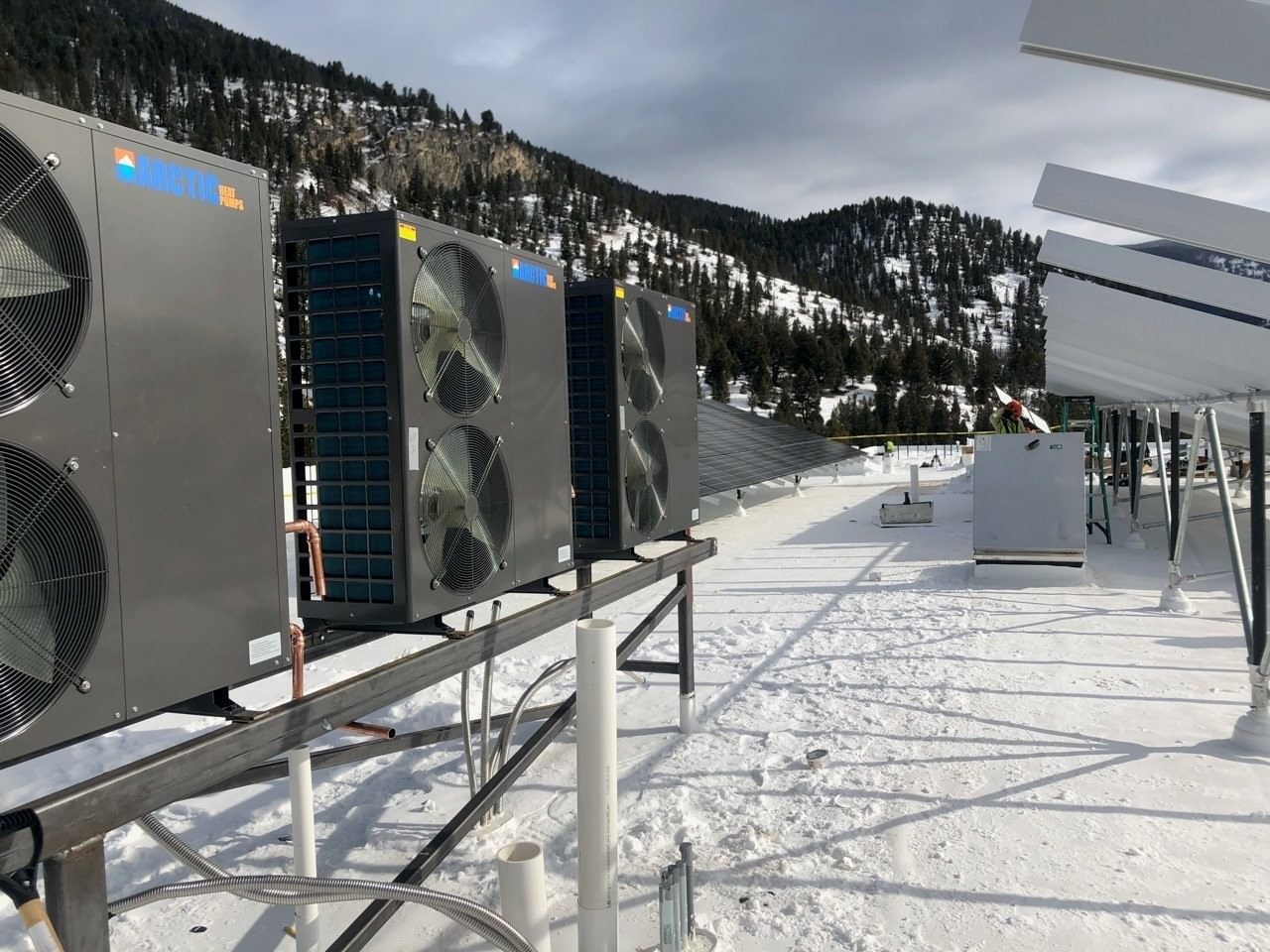
This is the most versatile path to whole-home efficiency in a cold climate. Premium systems use enhanced vapor injection (EVI) compressors to keep harvesting heat from the air at extremely low temperatures. Arctic Heat Pumps, for example, use Panasonic EVI DC-inverter compressors to operate down to −35 °C (−31 °F), integrate heating, cooling, and hot water in one monobloc outdoor unit, and do it at roughly half the installed cost of a comparable geothermal system.

With a built-in backup heater that only engages on the coldest days, an air-to-water system can cover virtually all of a home’s heating needs while running on electricity. Because the refrigeration cycle stays sealed in the outdoor unit (only water pipes enter the house), installation is simpler and safer than a split system.
most efficient heating and cooling system

How Do Heating Systems Work in Cold Climates

Cold weather changes the physics of heating, and different systems respond very differently.

Combustion Systems (gas furnaces, boilers)

They are largely indifferent to outdoor temperature; they burn fuel to make heat, so a −20 °F night doesn’t reduce their output. Their efficiency is fixed by their AFUE rating. This consistency is their strength; their weakness is dependence on fuel and the duct or pipe losses in distribution.

Heat Pumps

Heat Pumps for cold climates work by extracting heat that exists in outdoor air, even when it feels frigid; there’s usable thermal energy in air well below 0 °F. As the air gets colder, there’s less heat to harvest, so a heat pump’s output and efficiency gradually decline. This is where cold-climate engineering matters.

Variable-speed inverter compressors ramp up to maintain output, and enhanced vapor injection (EVI) effectively “supercharges” the refrigerant cycle so the unit keeps delivering strong, efficient heat at temperatures that would stall an older heat pump. When the temperature finally drops below the unit’s design limit, a small backup heat source covers the gap.

Distribution

Distribution is the other half of the equation. Forced-air systems heat air and blow it through ducts, which is fast but prone to losses and uneven temperatures. Hydronic systems heat water and circulate it through floors or radiators, delivering steady, even warmth at low temperatures, a natural match for heat pumps and condensing boilers. The most efficient cold-climate setups deliberately pair a high-efficiency heat source with a low-temperature distribution method.

Compare Heating Systems to Choose the Best One

Choosing the best heating and cooling system for your house means weighing several factors together rather than chasing a single number. Here’s how you can evaluate them.

Annual Fuel Utilization Efficiency (AFUE) and COP/HSPF

For combustion systems, AFUE tells you what percentage of fuel becomes usable heat. 

Look for 90%+ (ideally 95%+). For heat pumps, efficiency is expressed as COP (coefficient of performance) or HSPF2 (heating seasonal performance factor); A COP of 3.0 means 300% efficiency, something no combustion system can reach. When comparing across categories, remember that a 95% AFUE furnace still delivers less than one unit of heat per unit of fuel, while a heat pump delivers three or four.

Climate and Usage Patterns

Your climate zone is decisive. In milder cold climates, a standard or cold-climate air-source heat pump alone may cover everything. In the harshest zones, a cold-climate heat pump with backup, a dual-fuel hybrid, or geothermal makes more sense. 

How you use your home matters too: zoning, setback schedules, and whether you heat the whole house or just occupied areas all shape which system delivers the best real-world efficiency.

Energy Consumption Before and After Upgrading

The clearest proof of efficiency is your own utility bill. Compare your current annual heating energy use against a prospective system’s projected consumption. 

Replacing aging equipment, an old 70% AFUE furnace, electric resistance baseboards, or a first-generation heat pump often produces immediate, obvious savings in the first winter. Ask installers for a load calculation and an estimated annual operating cost so you can compare like-for-like.

Fuel Prices and Availability

Efficiency on paper means little if the fuel is expensive or unavailable. Compare your local electricity rate against natural gas, propane, or oil prices; the electricity-to-gas price ratio largely determines whether a heat pump or a furnace is cheaper to run in your area. 

Homes currently on propane, heating oil, or electric resistance almost always save the most by switching to a heat pump, because they’re starting from the most expensive heat.

Installation and Maintenance Requirements

Upfront cost varies widely: a high-efficiency furnace or air-source heat pump typically runs in the low-to-mid five figures installed, a cold-climate heat pump carries a 20–40% premium over a standard model, and geothermal sits highest because of excavation.

Retrofits may need electrical panel upgrades or duct sealing. On maintenance, heat pumps and boilers are generally low-fuss with annual servicing; the simplest installs are monobloc heat pumps that need only an electrical connection and water piping, with no on-site refrigerant work.

Home Insulation and Heat Loss

The most overlooked factor: the most efficient system in a leaky, under-insulated house will still cost a fortune to run. Heat loss through walls, attics, windows, and air leaks sets your home’s heating load, and a smaller load means a smaller, cheaper, more efficient system can keep you comfortable.

Before (or alongside) any heating upgrade, sealing and insulating the envelope is the highest-return investment you can make. This is why serious energy-efficient home plans for cold climates always tackle the building envelope and the heating system together.

How to Boost Your Heating System’s Performance

Even the best system underperforms if the home around it works against it. These upgrades raise efficiency no matter which system you run.

Improve Home Air Sealing

Air leaks around windows, doors, rim joists, and penetrations let warm air escape and cold air in, forcing your system to work harder. Sealing these gaps with caulk, weatherstripping, and spray foam is among the cheapest, highest-return efficiency improvements available, often paying for itself in a single heating season.

Add and Upgrade Insulation

Insulation is what holds the heat your system produces. Topping up attic insulation, insulating walls and basements, and addressing thermal bridges reduces your heating load directly, letting your system run less and last longer. In a cold climate, attic and below-grade insulation deliver the biggest returns.

Optimize Thermostat Use

A programmable or smart thermostat trims energy use by matching heat to your actual schedule, setting back temperatures when you’re asleep or away. Note one caveat for heat pumps: deep setbacks can trigger inefficient backup heat on recovery, so modest, steady adjustments (or a thermostat designed for heat pumps) work best.

Upgrade Ductwork or Hydronic Piping

Leaky, uninsulated ducts can waste a large share of the heat a forced-air system produces. Sealing and insulating ducts, especially those running through unconditioned attics and crawlspaces, recovers that lost energy. For hydronic systems, insulating pipe runs and ensuring proper flow keep water hot from the heat source to the emitter.

Match the Emitter to the Heat Source

Heat pumps and condensing boilers are most efficient at low water temperatures, so pairing them with low-temp emitters, radiant floors, modern fan coils, or appropriately sized low-temperature radiators, unlocks their full efficiency. Old cast-iron radiators and high-temperature air handlers force the system to work harder; upgrading or oversizing them can transform efficiency.

Use Zoning and Commit to Maintenance

Zoning lets you heat occupied areas without wasting energy on empty rooms. Routine maintenance, clean filters, annual professional checks, and clear outdoor units keep any system running at peak efficiency. A neglected filter alone can quietly degrade performance and shorten equipment life.

To Conclude With

The most efficient heating system for cold climates is the one that matches a high-efficiency heat source to a low-temperature, low-loss distribution method in a well-sealed home. Geothermal leads on raw efficiency, but cold-climate air-source and air-to-water heat pumps deliver most of that performance, plus cooling and hot water, at a far lower cost, which is why they’ve become the default choice for efficient electrification in northern homes.

For homeowners who want whole-home heating, cooling, and hot water from one efficient electric system that thrives in deep cold, an air-to-water heat pump paired with hydronic radiant floors is hard to beat. Explore Arctic’s cold-climate heat pumps, EVI inverter units that run down to −35 °C, integrate radiant floor heating, hot water, and cooling, and cost about half what geothermal does, or use Arctic’s heat pump sizing tool to find the right capacity for your home and climate.

Frequently Asked Questions

Geothermal heat pumps are the single most efficient, followed closely by cold-climate air-source and air-to-water heat pumps. For whole-home efficiency that also provides cooling and hot water, a cold-climate heat pump paired with low-temperature distribution like radiant floors is the strongest all-around choice. The “best” depends on your fuel prices, climate zone, and budget.

Yes. Modern cold-climate heat pumps with inverter compressors and enhanced vapor injection keep heating efficiently well below freezing; the best units operate down to around −31 °F. Below their design limit, a small backup heat source covers the rest, so you stay warm in any conditions.

Look for cold-climate-rated units with variable-speed (inverter) compressors, EVI technology, a low-ambient operating spec (the lower the better), and an integrated backup. Air-to-water monobloc systems are especially reliable because the refrigerant cycle is sealed outdoors, and they include automatic backup control.

Installed costs for cold-climate air-source systems typically run higher than standard heat pumps, roughly a 20–40% premium, while geothermal runs the highest due to excavation. Actual pricing depends on home size, distribution type, and any electrical or ductwork upgrades. Note that the 30% U.S. federal heat-pump tax credit expired at the end of 2025; state and utility rebates may still apply, so check local programs before budgeting.

A heat pump is more efficient and also provides cooling, usually winning on the total cost of ownership where electricity is reasonably priced. A gas furnace gives instant, fuel-price-dependent heat in any weather. In the coldest zones, a dual-fuel hybrid combines both. Your local electricity-to-gas price ratio is the deciding factor.

A cold-climate heat pump, air-source or air-to-water, is the most efficient single system that handles both heating and cooling, and air-to-water units can add domestic hot water too. Pairing one with hydronic radiant distribution delivers the most even, efficient comfort.

Significantly. A well-sealed, well-insulated home has a lower heating load, which means you can install a smaller, cheaper, more efficient system. Improving your envelope first often lets you downsize the heating equipment and improves comfort with any system.

How to Choose the Right Heat Pump Contractor (Checklist & Tips)

How to Choose the Right Heat Pump Contractor

You have decided to install or upgrade a heat pump. Smart move, but now comes the part that can make or break the whole investment. Finding the right heat pump contractor.

The truth is, not every HVAC company is qualified to install or service a modern heat pump, especially a cold climate or DC inverter model. A poor installation can cut your system’s efficiency in half, void your warranty, and leave you with expensive repairs down the road.

This guide will walk you through exactly how to choose the right heat pump contractor. What certifications to look for, what questions to ask, and which red flags should make you walk away.

Quick Answer:

The right heat pump contractor is licensed, insured, and experienced specifically with heat pump systems, not just general HVAC. They should be able to perform a proper heat load calculation, explain your installation options clearly, and back their work with a written warranty.


Why Choosing the Wrong Contractor Is a Costly Mistake

A heat pump is not a plug-and-play appliance. The installation involves refrigerant handling, electrical work, ductwork or hydronic piping, control systems, and in many cases, integration with solar or domestic hot water systems.

When a contractor without proper heat pump training does the job, here is what can go wrong:

  • Incorrect system sizing: Leads to short cycling, poor efficiency, and premature compressor wear
  • Improper refrigerant charge: It reduces heating/cooling capacity and increases energy bills
  • Wrong placement of the outdoor unit: It causes noise issues, reduced airflow, and frost problems
  • Poor electrical wiring: It creates safety hazards and trips breakers
  • Voided manufacturer warranty: The most warranties require certified installation


For cold climate homeowners in Canada and northern US states like Maine or Vermont, these mistakes are even more costly. Your heat pump needs to operate reliably at -20°C or below that requires a contractor who genuinely understands cold weather heat pump performance.

7 Must-Ask Questions Before Hiring a Heat Pump Contractor

Use this checklist every time you are evaluating a contractor. Their answers will tell you quickly whether they are the right fit.

1. Are You Licensed and Insured in My Province or State?

This is non-negotiable. A licensed contractor has passed required trade exams and carries liability insurance. If something goes wrong during installation like a refrigerant leak, electrical fault, or property damage. You need to know you are protected.

In Canada, look for a Red Seal certification or provincial HVAC licence. In the US, look for EPA 608 certification (required for refrigerant handling) plus a state-level contractor licence.

2. Do You Have Experience With Cold Climate or Inverter Heat Pumps Specifically?

Cold climate heat pumps, especially those using EVI (Enhanced Vapor Injection) and DC inverter compressor technology. It is fundamentally different from standard air conditioners or even older heat pump models.

A contractor who has only installed mini-splits or standard split systems may not know how to properly commission an air-to-water heat pump or a hydronic heat pump system. Ask directly: How many cold climate heat pump installations have you completed in the last 12 months?

3. Will You Perform a Heat Load Calculation?

A proper installation always starts with a heat load calculation (also called a Manual J in the US or CSA F280 in Canada). This determines exactly how much heating and cooling capacity your home needs.

Any contractor who skips this step and just guesses the system size based on square footage is cutting corners. Oversized and undersized units both cause serious problems.

Pro Tip:

Arctic Heat Pumps offers a free heat load design service to help homeowners and contractors size systems correctly. Ask your contractor if they use a similar calculation process before signing anything.


4. Are You Familiar With My Specific Brand or System?

Different heat pump brands have different commissioning procedures, control systems, and fault diagnostics. A contractor experienced with Arctic, Mitsubishi, or Daikin units will set up your system correctly and know how to read its error codes if something comes up later.

If you are already considering an Arctic heat pump, ask if they have installed Arctic units before or if they are willing to review the technical documentation before the job.

5. What Does the Installation Include?

A complete heat pump installation is more than just mounting the unit. Make sure you get a clear scope of work in writing, including:

  • Electrical panel upgrade if required
  • Refrigerant line set and insulation
  • Condensate drainage setup
  • Thermostat or controller wiring and programming
  • Integration with existing hydronic, radiant floor, or duct system if applicable
  • Commissioning and test run before handover


6. What Warranty Do You Provide on Labour?

Most heat pump manufacturers offer 5 to 12 year warranties on parts. But the labour warranty depends entirely on your contractor. Ask for at least 1 to 2 years of labour coverage. If a contractor offers no labour warranty, that is a significant red flag.

7. Can You Help Me Access Rebates or Incentive Programs?

In Canada and many US states, government rebates are available for heat pump installations. A knowledgeable contractor should be able to guide you through programs like the Canada Greener Homes Grant, BC Hydro rebates, or state-level utility incentives.

Arctic Heat Pumps provides detailed information on air-to-water rebate programs and regional incentives. Make sure your contractor knows what is available in your area.

Red Flags to Watch Out For

Not every contractor who calls themselves an HVAC professional is right for a heat pump installation. Here are warning signs that should make you pause:

Red Flag

Why It Matters

Skips the heat load calculation

Guesswork sizing causes inefficiency and early failure

Cannot explain inverter technology

Likely has no real heat pump experience

No written quote or scope of work

Verbal agreements lead to disputes and surprise costs

Pressures you to decide same day

Trustworthy contractors give you time to compare

Unusually low price with no explanation

May cut corners on materials or skip key steps

No labour warranty offered

They may not stand behind their work

Cannot name past heat pump projects

Inexperience with heat pumps specifically

Not familiar with available rebates

Likely not up to date on the industry


What Certifications Should a Heat Pump Contractor Have?

Certifications are one of the fastest ways to verify a contractor’s expertise. Here is what to look for in Canada and the US:

In Canada

  • Red Seal Refrigeration and Air Conditioning Mechanic — the gold standard for HVAC work
  • HRAI (Heating, Refrigeration and Air Conditioning Institute of Canada) certification
  • TECA (Technology, Environment and Certification Authority) certification
  • Manufacturer-specific training from brands like Arctic, Mitsubishi, or Bosch


In the United States

  • EPA Section 608 certification required to handle refrigerants legally
  • NATE (North American Technician Excellence) heat pump specialty
  • State contractor licence varies by state, always required
  • ACCA (Air Conditioning Contractors of America) membership


Important:

For cold climate and hydronic heat pump systems, manufacturer-specific training is just as important as general certifications. A technician trained directly by Arctic or a similar manufacturer will understand your system at a deeper level than someone who only has general HVAC credentials.


How to Compare Multiple Heat Pump Contractor Quotes

You should always get at least two to three quotes before making a decision. But a quote is more than just a number, here is how to compare them properly:

  1. Make sure each quote covers the same scope of work
  2. Check whether the quote includes equipment, labour, permits, and disposal of old equipment
  3. Ask each contractor what brand and model they are proposing and why
  4. Compare the proposed system’s HSPF2 (Heating Seasonal Performance Factor) rating for efficiency
  5. Check each contractor’s reviews specifically for heat pump installations, not just HVAC in general
  6. Ask whether the quoted system qualifies for available rebates


The cheapest quote is rarely the best value. A properly installed high-efficiency system will save you far more in energy costs over 15 years than you would save by going with the lowest bidder.

Cold Climate Installations: Why Your Contractor’s Experience Matters Even More

If you live in Canada, Maine, Vermont, Minnesota, or any region that sees temperatures below -15°C in winter, your contractor’s experience with cold climate systems is critical.

Here is why standard HVAC experience is not enough:

Cold Climate Heat Pumps Use Different Technology

Modern cold climate heat pumps use EVI (Enhanced Vapor Injection) compressors and DC inverter drives that maintain high efficiency down to -30°C. These systems have different refrigerant pressures, control logic, and defrost cycles than standard units.

A contractor who is not familiar with EVI technology may misinterpret normal operating behaviour as a fault or worse, adjust settings that actually reduce performance.

Hydronic Integration Is a Specialty

Many cold climate homeowners use hydronic heat pump systems. Where the heat pump heats water that circulates through radiant floor heating, fan coils, or air handlers. This type of installation requires knowledge of hydronic piping, buffer tanks, zone controllers, and mixing valves. Such features that are separate from standard forced-air HVAC.

Outdoor Unit Placement Is Critical in Cold Climates

Snow accumulation, prevailing wind direction, and clearance from the ground all affect how well your heat pump performs in winter. An experienced cold climate installer knows exactly where to position the unit for maximum performance and minimum maintenance.

Your Complete Contractor Hiring Checklist

Print this out or save it before you start calling contractors:

Checklist Item

Licensed and insured in your province or state

EPA 608 certified (US) or Red Seal / TECA certified (Canada)

Specific heat pump installation experience — not just HVAC

Experience with cold climate or EVI inverter systems

Will perform a heat load calculation before sizing the system

Familiar with your chosen brand (e.g. Arctic Heat Pumps)

Provides written quote with full scope of work

Offers at least 1-year labour warranty

Can assist with rebate applications

Has verifiable reviews from heat pump customers

Does not pressure you into a same-day decision

Explains technical details clearly and answers your questions


Related Resources from Arctic Heat Pumps


Conclusion

Choosing the right heat pump contractor is just as important as choosing the right heat pump. A skilled, certified installer ensures your system performs as designed, your warranty stays valid, and your home stays warm even when the temperature drops well below zero.

Take your time, ask the right questions, use the checklist above, and do not let price alone drive the decision. The best contractor is the one who shows up prepared, communicates clearly, and backs their work in writing.

If you are considering an Arctic heat pump and want guidance on finding a qualified installer in your area, reach out to the Arctic team directly. They can connect you with trained contractors and help you plan your installation the right way.


Planning a Heat Pump Installation?

Don’t leave your investment to chance. Work with a contractor who knows cold climate heat pumps inside and out.

Explore Arctic’s free heat load design service and find the right system for your home.

Visit arcticheatpumps.com/contact-us.html to get started today.

Frequently Asked Questions (FAQ)

An HVAC contractor handles heating, ventilation, and air conditioning broadly like furnaces, boilers, ductwork, and central air. A heat pump contractor has additional, specialized training in heat pump refrigerant systems, inverter technology, and cold climate performance. For a heat pump installation, you want the latter. Ideally someone with both general HVAC credentials and heat pump-specific experience.

Get at least two, ideally three quotes. This gives you a realistic sense of market pricing and lets you compare how each contractor approaches the scope of work. A significant price gap between quotes is often a sign that one contractor is leaving something out. Ask for a detailed breakdown before deciding.

Technically yes, but practically no. Cold climate heat pumps, especially EVI DC inverter models, have different commissioning requirements, refrigerant handling procedures, and control settings than standard HVAC equipment. A contractor without specific cold climate heat pump training may install the unit but not optimize it for peak performance in your climate.

Arctic Heat Pumps works with a manufacturers representative network of trained contractors across Canada and the US. You can contact Arctic directly to get a referral to a contractor familiar with their product line in your area.

Incorrect installation can void your manufacturer warranty, reduce system efficiency, cause early component failure, and in serious cases create safety hazards. This is why choosing a certified, experienced contractor from the start is so important. Always get a written scope of work and keep a copy of all documentation.

Not automatically. Price is one factor, but it should not be the deciding one. A low quote might mean the contractor is cutting corners on equipment quality, skipping the heat load calculation, or not including permits and inspections. Always ask what is included in the price and compare quotes on an equal basis.

A standard air-source heat pump installation usually takes one to two days. A more complex installation involving hydronic piping, radiant floor integration, or a whole-home system can take three to five days or more. Ask your contractor for a realistic timeline before work begins.

Radiant Cooling for Zoos: Animal Climate Control Guide

Innovative Cooling for Zoo Habitats

What is Radiant Cooling for Zoos? Radiant cooling for zoos is an advanced hydronic climate control system that circulates chilled water through PEX tubing embedded in enclosure floors, rocks, or climbing structures. Unlike noisy forced-air AC, radiant cooling provides silent, draft-free, and energy-efficient temperature regulation, mimicking natural cool surfaces. It is the preferred solution for heat-sensitive animals like red pandas, polar bears, and penguins to prevent heat stress.

Continue reading

Arctic Heat Pumps Wins 2025 FedEx Small Business Award

Fed Ex Business Award

Arctic Heat Pumps has been officially named a Winner of the 2025 FedEx #BackingSmall Small Business Award. Selected from thousands of applicants across Canada, this prestigious honor recognizes Arctic’s innovation in cold-climate hydronic heating technology and its commitment to sustainability. This milestone validates our mission to provide energy-efficient heating solutions for the harshest North American winters.

Cold-Climate Heat Pump

1.A Milestone Achievement for Sustainable Innovation

We are incredibly proud to announce that Arctic Heat Pumps has been recognized as a 2025 FedEx #BackingSmall Small Business Award Winner!

This esteemed award honors Canadian companies that lead in innovation, growth, and community impact. For us, winning this award is not just a trophy, it is a defining moment in our journey toward making green energy accessible in cold climates.

The FedEx #BackingSmall Contest awards entrepreneurial spirit and rewards companies making a visible difference. In 2025, with a $150,000 prize pool, Arctic Heat Pumps was honored for its dedicated work advancing air-to-water heat pump technology for extreme climates.

Learn more about the program : FedEx.com

2.Why This Recognition Matters

For our customers, partners, and the green building community, this award serves as a powerful validation of our technology.

Award Highlights & Impact

Feature
What This Means for You
Industry Validation
FedEx’s vetting confirms the reliability and real-world impact of our heating systems.
Empowered Innovation
The grant allows us to accelerate R&D for even more efficient cold-weather performance.
Market Confidence
Homeowners and contractors can trust they are choosing an award-winning, recognized brand.
Sustainability Goal
Recognizes our contribution to reducing carbon footprints across North America.

3.Our Journey: From Concept to Award-Winner

Arctic Heat Pumps began with a simple yet ambitious goal: to redefine heating and cooling for cold climates.

While many heat pumps fail when temperatures drop, our team of engineers dedicated years to developing Hydronic Air-to-Water Systems that remain efficient even in freezing conditions. From custom engineering to turnkey installation support, our growth has been driven by a refusal to compromise on performance.

This award confirms that our vision of combining sustainability with reliability is the future of HVAC.

4.What Winning Means for the Future

Winning the 2025 FedEx #BackingSmall Award is not a finish line for us; it is a launchpad. We plan to reinvest these resources directly into what matters most:

  • Growth Acceleration: Expanding our production capabilities to meet the growing demand in Canada, the US, and Europe.
  • Advanced R&D: Developing next-generation features that make our heat pumps even easier to install and integrate with solar/geothermal setups.
  • Customer Support: Strengthening our support network to assist homeowners and installers seamlessly.
  • Community Leadership: Inspiring other Canadian small businesses to pursue sustainable innovations.

5.A Heartfelt Thank You

This achievement belongs to the entire Arctic Heat Pumps family.

  • To our dedicated staff who engineer and support our systems.
  • To our loyal customers who trusted us to keep their homes warm.
  • To FedEx, for believing in the power of small businesses to change the world.

We are proud to be part of a community that values resilience and sustainability. As we celebrate this milestone, we look ahead to a future powered by renewable energy.

Frequently Asked Questions (FAQs)

The FedEx #BackingSmall Award is a prestigious program that recognizes and rewards Canadian small businesses demonstrating exceptional innovation, community impact, and growth potential.

 Arctic Heat Pumps was selected for its leadership in the Green Energy sector, specifically for developing high-efficiency cold-climate heat pumps that reduce reliance on fossil fuels in extreme winter conditions.

The resources and recognition from this award will be used to accelerate Product R&D, improve customer support services, and expand availability across North America, ensuring better products and service for our users.

Yes. While we are a proud Canadian company, our award-winning hydronic heating and cooling systems are shipped and installed across the United States and parts of Europe.

You can explore our full range of products, including our Cold Climate Heat Pumps and Pool Heaters, directly on our website at www.arcticheatpumps.com.