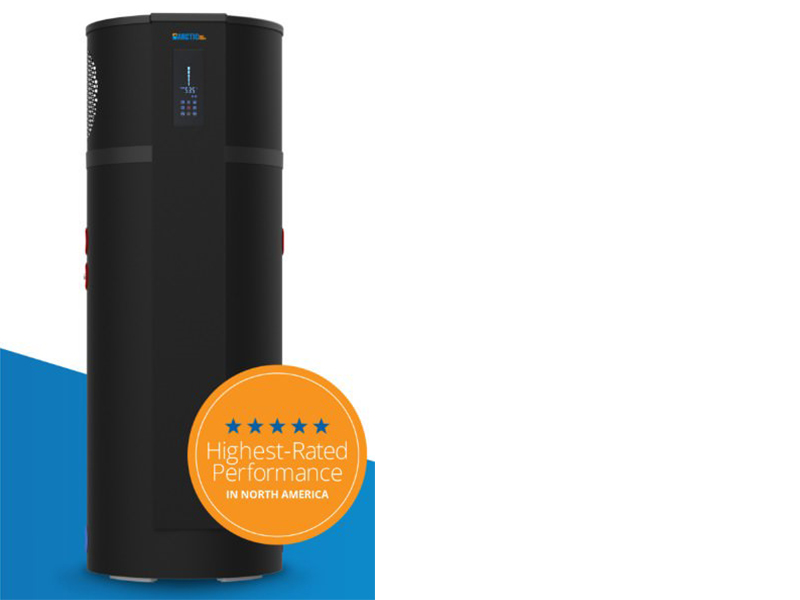
How do I choose the right heat pump water heater? To select the best heat pump water heater, look for a UEF (Uniform Energy Factor) of 4.0 or higher. Sizing is critical: a general rule is 20 gallons per person, so a family of four needs an 80-gallon tank. Installation requires a 240V electrical circuit, a condensate drain, and roughly 700 cubic feet of air space (like a garage or basement) to operate efficiently.
1. Why Make the Switch in 2026?
Domestic Heat Pump Water Heaters (HPWHs) are the biggest energy savers in the modern home. While standard electric tanks are 100% efficient (using $1 of power to give $1 of heat), Arctic Heat Pump Water Heaters utilize Air-to-Water technology to achieve 400% efficiency.
This means for every $1 you spend on electricity, you get **$4 worth of hot water**.
If you are replacing an old tank or building a new home, understanding how to size and install these units is the key to locking in those savings.

2. Choosing the Right Domestic Heat Pump Water Heater
Don’t just buy the first tank you see on sale. In 2026, pay attention to these three critical specs:
A. Sizing (The 20-Gallon Rule)
Heat pumps heat water slightly slower than traditional electric elements. Therefore, “Upsizing” is the smart move.
- Standard Electric Tank: A family of 4 might use a 50 gallon tank.
- Heat Pump Tank: That same family should opt for an 80 gallon unit.
- Why? A larger tank stores more hot water, allowing the heat pump to run in its most efficient “Eco Mode” without needing to trigger the expensive backup electric element during morning showers.
B. Energy Efficiency (Look for UEF)
The magic number is UEF (Uniform Energy Factor).
- Standard Tank: ~0.93 UEF
- Arctic Heat Pump Tank: 4.14 UEF (The highest in North America).
- Impact: A 4.14 UEF unit uses roughly 75% less electricity than a standard tank.
C. Climate Performance
Most generic heat pump tanks struggle when the garage or basement gets cold (<40°F). One of the most important advantages is that our units are designed for cold climates, maintaining efficiency even when surrounding air temperatures drop, ensuring you have hot water during winter storms.
3. Installation Requirements: Is Your Home Ready?
Before ordering, check these three boxes. If you miss one, the unit won’t work properly.
1. Air Space (The “Breathing Room”)
Heat pumps extract heat from the air. To do this, they need volume.
- Requirement: ~700 cubic feet of unrestricted air space (e.g., a 10’ x 10’ room).
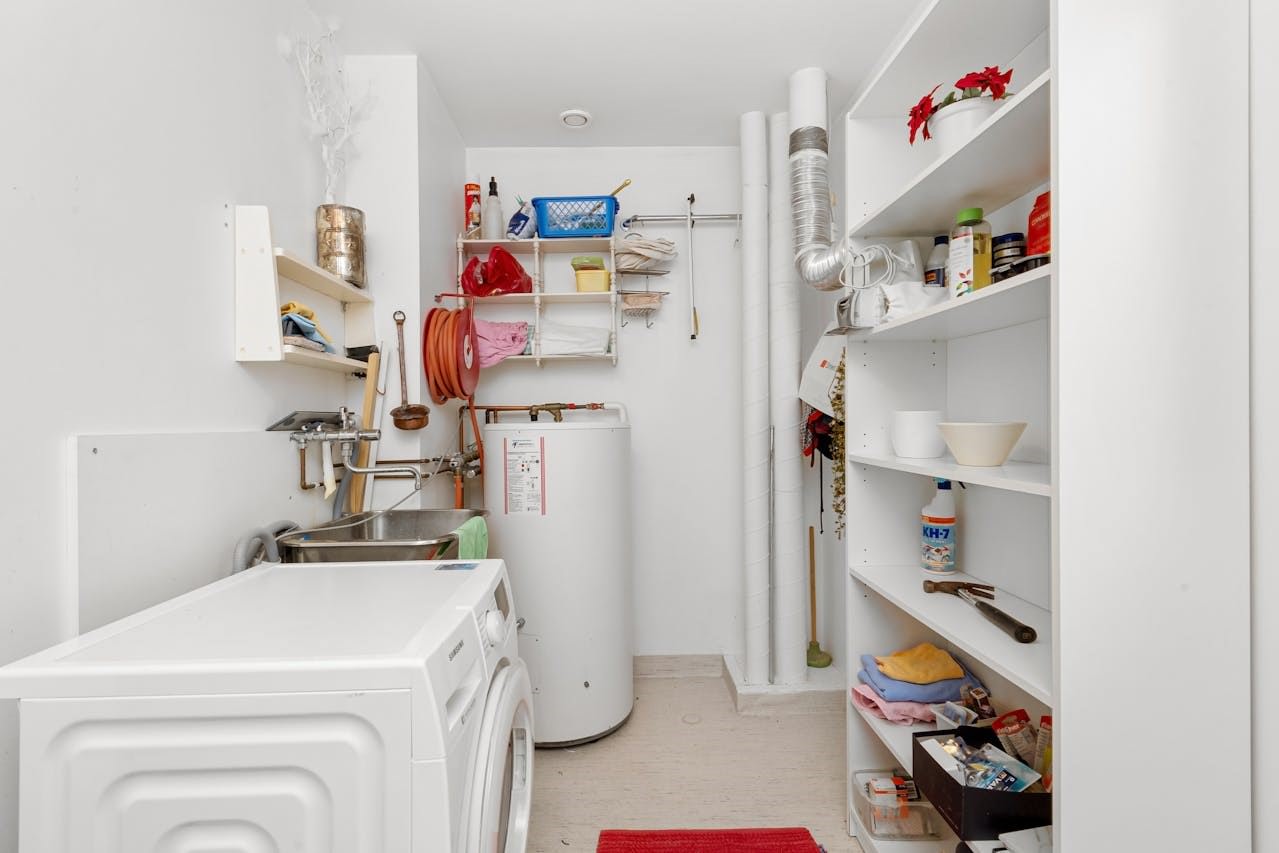
- Ideal Locations: Unfinished basements, garages, or large utility rooms.
- Tight Spot Solution: If installing in a small closet, you must install louvered doors or duct the intake/exhaust to a larger room or outdoors.
2. Condensate Drainage
Unlike old tanks, heat pumps dehumidify the air, producing water (condensate). You need a floor drain or a small condensate pump to move this water away.
3. Electrical (240V vs 120V)
- Standard: Most high-efficiency units (including Arctic) require a 240-volt, 30-amp dedicated circuit.
- Retrofit Challenge: If replacing a gas water heater, you may need an electrician to run a new power line, as gas units typically use a standard 120V outlet.
4. Step-by-Step Installation Guide
Note: We recommend hiring a professional, but knowing the steps protects you from bad installs.
- Positioning: Place the unit with access to the air filter and control panel. Ensure at least 6 to 12 inches of clearance from walls.
- Plumbing Connection: Connect Cold (Inlet) and Hot (Outlet).
- Pro Tip: Always install Dielectric Unions to prevent corrosion between copper pipes and the tank.
- Vacuum & T&P Valves:
- Install a Vacuum Relief Valve (prevents tank collapse during draining).
- Install the T&P (Temperature & Pressure) Relief Valve (mandatory safety feature).
- Expansion Tank: Most local codes in 2026 require a thermal expansion tank to handle pressure fluctuations.
- Condensate Line: Connect the drain line. Ensure it flows downhill or into a pump.
- Power Up: Turn on the water before the electricity to avoid burning out the heating element (Dry Fire). Then, flip the breaker.
5. Common Challenges & Solutions
Challenge 1: “It makes my basement cold.”
- The Reality: The unit blows out cool, dry air.
- The Fix: In summer, this is free air conditioning! In winter, if it’s too cold, you can duct the exhaust air into another room or outside.
Challenge 2: Noise.
- The Reality: Older models hummed loudly.
- The Arctic Fix: Arctic models operate at ~49 dB (quieter than a library conversation), making them unobtrusive even in indoor utility rooms.
Conclusion: A Smart Investment for 2026
Choosing and installing a Domestic Heat Pump Water Heater requires a bit more planning than a standard tank, but the payoff is massive. With the Arctic 4.14 UEF model, you are future-proofing your home against rising energy costs.
Ready to start saving? 👉 View Arctic’s High-Efficiency Water Heaters
Frequently Asked Questions (FAQs)
Do I need a plumber or an electrician?
Often both. A plumber handles the water connections and condensate drain, while an electrician ensures the 240V circuit is safe. Arctic units are “retrofit ready,” but professional installation ensures your warranty remains valid.
How long does a heat pump water heater last?
With proper maintenance (changing the anode rod and cleaning the air filter), an Arctic Heat Pump Water Heater can last 15-20 years, significantly longer than standard gas tanks (8-12 years).
Can I install this if I currently have a gas heater?
Yes, but you will need to cap the gas line and have an electrician install a 240V outlet. While this adds an initial cost, the energy savings usually pay for this upgrade within 2-3 years.