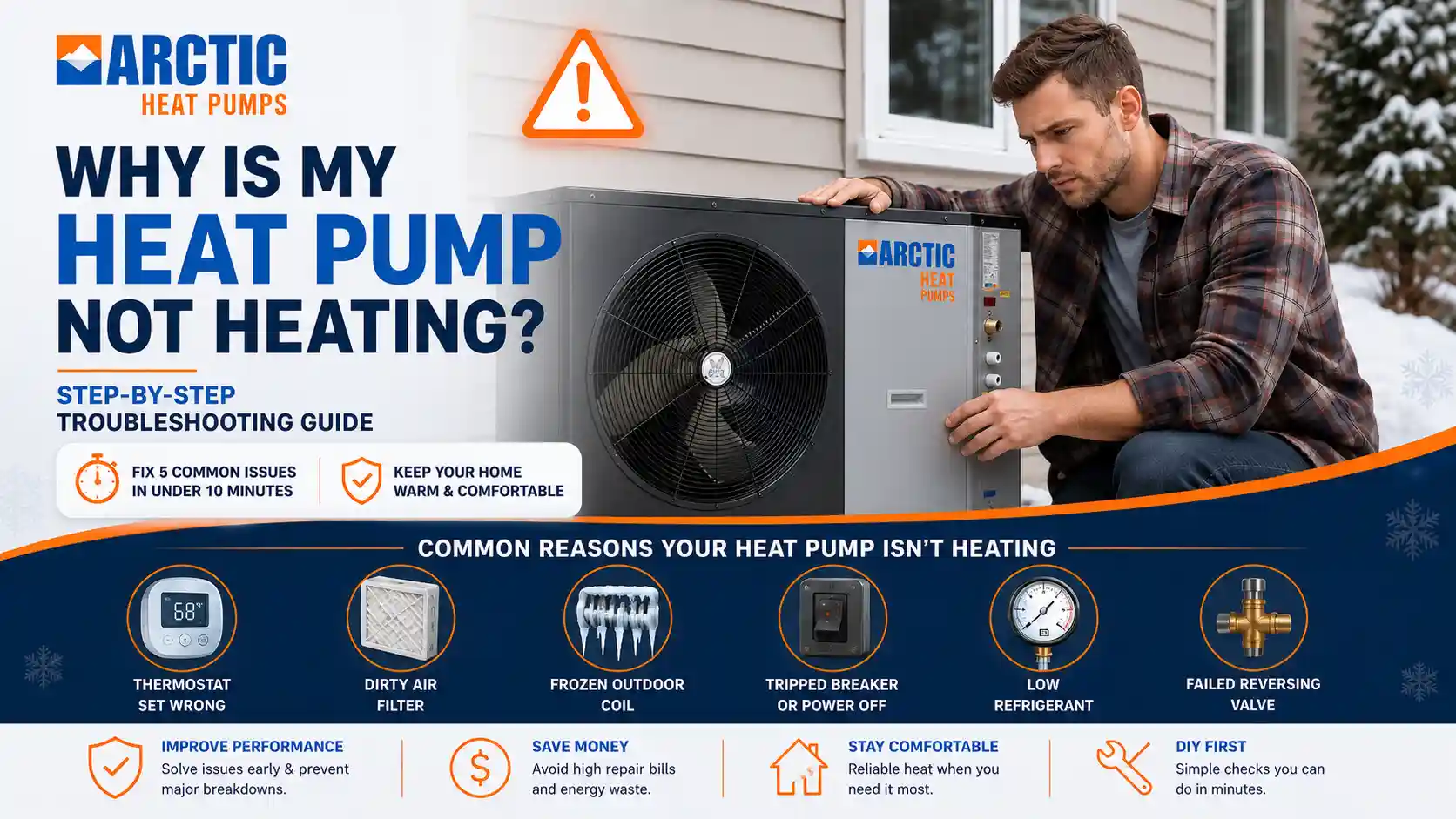
Thinking about why is my heat pump not heating? A heat pump that isn’t heating usually comes down to one of a short list of causes: a thermostat set wrong or out of calibration, a dirty air filter choking airflow, a frozen outdoor unit, a tripped breaker or an off power switch, a low refrigerant charge, or a failed reversing valve.
About half of these you can resolve yourself in ten minutes. The rest involve the sealed refrigerant circuit or control board and need a licensed technician. Before assuming the worst, read our article to learn why heat pumps stop heating, the troubleshooting process, and how to maintain them to prevent future damage. Let’s begin.
Possible Reasons Why Your Heat Pump Is Not Working Properly
Here are the reasons why your heat pump is not blowing warm air.
- Check the temperature rise. A typical heating system may show roughly a 15–25°F rise between return and supply air, although exact values vary by equipment and conditions.
- It may be in defrost mode. In cold, damp weather, the outdoor unit may temporarily reverse operation to melt frost. Steam and a temporarily stopped outdoor fan can be normal. Frequent or prolonged defrosting is not.
- Restricted airflow. A dirty filter, blocked return, closed vents, damaged ductwork, or snow around the outdoor unit can reduce heating performance.
- Low refrigerant. Heat pumps do not normally consume refrigerant. Low levels usually indicate a leak and can cause poor heating, long run times, or coil icing.
- Electrical or mechanical problems. Failed capacitors, contactors, fan motors, reversing valves, controls, or compressors can prevent proper heating.
- Thermostat or settings. Incorrect mode, calibration issues, or poorly configured backup heat can make the system appear ineffective.
- Backup heat may not operate. A failed heat strip, sequencer, wiring issue, or incorrect lockout setting can prevent supplemental heat from engaging.
- Outdoor temperature matters. Heat pumps lose heating capacity as temperatures fall. If the system consistently struggles in cold weather, the issue may be sizing or system design rather than a failed component.
- Hydronic systems. Low water flow, trapped air, clogged strainers, or poorly adjusted outdoor-reset controls can reduce heat output.
Why Is My Heat Pump Not Heating? Expert Troubleshooting Process
Work through these in order. Stop as soon as heat returns. Before you reset anything, photograph any fault code on the thermostat or controller; resetting erases the best clue a technician has.
Incorrect Thermostat Settings
Start with the thermostat because this check is free and can solve many heating problems. Make sure it is set to Heat, the temperature is at least 2-3°F above the current room temperature, and the fan is set to Auto rather than On. When the fan stays on, it can circulate room-temperature air between heating cycles, making it feel as though the heat pump is blowing cold air. Also, check the programmed schedule and replace the batteries if needed.
Uncalibrated or Faulty Thermostat
A thermostat that reads the room temperature incorrectly can cause the heat pump to cycle improperly. Place a separate thermometer next to the thermostat and compare the readings after about 30 minutes. A difference of more than 2–3°F may indicate a problem.
Poor placement, such as direct sunlight, an exterior wall, or a drafty area, can also affect accuracy. Clean the thermostat gently, recalibrate it according to the manufacturer’s instructions, or consider replacing an older unit with a heat-pump-compatible model.
Tripped Circuit Breaker
Check the electrical panel because the indoor and outdoor components commonly use separate breakers. If a breaker has tripped, reset it once by switching it fully off and then back on. If it trips again, leave it off and call a qualified technician. Repeated resets can indicate an electrical fault or compressor problem and may create a safety hazard.
Indoor Unit Power Switch
Check the service switches near the air handler and outdoor unit. These can accidentally be turned off during cleaning, painting, or other work. Also check whether a condensate float switch has shut the system down because of a clogged drain or a backed-up drain pan. You can restore a mistakenly switched-off service switch yourself, but recurring float-switch shutdowns should be addressed rather than repeatedly bypassed.
Dirty Air Filter
A clogged filter restricts airflow and can significantly reduce heating performance. If little light passes through the filter, replace it rather than trying to clean a disposable pleated filter. Weak airflow, long run times, and overheating can all result from restricted airflow. Check the filter monthly during heavy-use periods and replace it according to the manufacturer’s recommendations, often every 1–3 months.
Frozen Outdoor Unit
Some frost on the outdoor coil is normal during cold, damp weather, but heavy ice covering the coil or fan is not. If the unit is heavily iced, use Emergency Heat if your system has it and allow the outdoor unit to thaw.
Keep snow, leaves, and debris away from the unit, and never chip ice with a tool or pour boiling water over the coil. If ice quickly returns after defrosting, a defrost-control problem, airflow issue, refrigerant problem, or drainage issue may require professional diagnosis.
Low Refrigerant Charge
A heat pump with low refrigerant may produce insufficient heat, run continuously, develop ice, or show an unusually low temperature rise. Refrigerant is not consumed during normal operation, so a low charge generally indicates a leak. A qualified HVAC technician should locate and repair the leak before recharging the system.
Bad Reversing Valve
If the heat pump cools normally in summer but fails to heat properly in winter, a faulty reversing valve is one possible cause. This valve changes the refrigerant direction so the system can switch between heating and cooling. A stuck valve or failed solenoid can prevent proper heating. Because repairing the valve requires specialized refrigerant work, this is a professional repair.
5 Regular Maintenance Tips to Protect Your Heat Pump
Most no-heat emergencies are preventable. Follow these simple maintenance tips to protect your heat pumps and use them for a long time.
Change the Air Filter Every 1–3 Months
A clean filter keeps airflow strong and prevents the heat pump from working harder than necessary. A clogged filter can reduce heating and cooling performance, increase energy use, and contribute to overheating or system failures. Check the filter monthly and replace it sooner if you have pets, smoke indoors, or are renovating.
Keep the Outdoor Unit Clear
Maintain roughly 24 inches of clearance around the outdoor unit and keep leaves, grass, snow, and other debris away from the coil. In snowy areas, make sure the unit is elevated above expected snow depth and protected from roof runoff. Never cover or tightly enclose the unit because it needs unrestricted airflow and proper drainage.
Test Your Backup Heat Before Winter
Test the auxiliary or emergency heating system before the coldest weather arrives. A backup heat source that has failed or been disabled can leave you without adequate heating during a severe cold snap.
Keep the Home Well Insulated
Air sealing and improving attic insulation reduce heat loss and help the heat pump maintain comfortable temperatures with less effort. Lower heating demand also reduces reliance on expensive backup heat and can improve overall system efficiency.
Schedule Professional Maintenance Twice a Year
Have the system inspected in spring and fall because heat pumps operate throughout the year. A professional can check refrigerant levels, clean the coils, inspect electrical components, test defrost operation, and verify airflow. Finding a weak component early can prevent a more expensive breakdown later.
When Repair Isn’t the Answer
A heat pump that isn’t heating is rarely a mystery. Start by confirming it’s a genuine fault rather than normal behaviour: a heat pump’s air feels cool, defrost cycles interrupt heating for 5–15 minutes, and every system has a balance point below which it needs help. Then work through the process in order: thermostat settings, thermostat calibration, breakers, power switches, the air filter, the outdoor unit, refrigerant charge, and finally the reversing valve. The first five you can handle yourself; the last three belong to a licensed technician.
And if the honest answer is that your system has never kept up on the coldest days, no repair will change that. That’s a design problem, undersized capacity, a system chosen for its mild-weather rating, or emitters that need hotter water than the equipment can produce. That’s where we can help you.
Arctic Heat Pumps has spent over 15 years engineering cold-climate air-to-water heat pumps for North American winters, tested in Winnipeg, where the weather doesn’t grade on a curve. Our EVI systems operate down to -35°C (-31°F) and handle whole-home heating, cooling, domestic hot water, and pool heating from a single outdoor unit, with built-in backup for the coldest days.
Every Arctic system includes a free heat loss analysis and custom hydronic design from our engineering team: precise load calculation, a schematic drawn for your floor plan, and matched components so the system performs from day one. You don’t have to believe our words, request your free system design, or run the numbers yourself with our free sizing tools. That’s all for today. Hope your heating pump works, and call us anytime you need professional help.
Frequently Asked Questions
Why is my heat pump running but not heating?
Usually airflow restriction (a dirty filter or blocked ducts), low refrigerant charge, or operation below the balance point where it can no longer meet the load. In air-to-water systems, low water flow is the leading cause. Measure the temperature rise across the indoor coil; under 15°F indicates a real fault rather than normal behaviour.
Why is my heat pump blowing cold air?
Four common reasons: the fan is set to “On” instead of “Auto” and is circulating room-temperature air between cycles; the thermostat is on Cool; the system is in its normal 5–15-minute defrost cycle; or the reversing valve has stuck in the cooling position. The first three cost nothing to fix.
How do I reset my heat pump?
Turn the thermostat off, switch off the breakers for both the indoor and outdoor units, wait five minutes, restore power, then set the thermostat back to Heat. Photograph any fault code first. If the fault returns immediately, stop resetting and call a technician; repeated resets can damage the compressor.
How long should a heat pump defrost cycle last?
Typically 5–15 minutes, occurring every 30–90 minutes when frost conditions exist. Steam rising from the outdoor unit during defrost is normal. Cycles that never end, repeat every 15 minutes, or leave ice behind indicate a defrost sensor, control board, or refrigerant problem.
Do heat pumps really work in cold climates?
Cold-climate models do. Conventional units lose most of their capacity below freezing, but cold-climate heat pumps using enhanced vapour injection (EVI) and inverter compressors maintain useful output well below 0°F, with some rated to -31°F (-35°C). What matters is correct sizing at your design temperature, a properly configured backup strategy, and emitters matched to heat pump water temperatures.
Is it normal for my heat pump to run constantly in winter?
Yes, in cold weather. Modern inverter-driven heat pumps are designed to run long, low-output cycles rather than short bursts; that’s their efficient operating mode. Constant running in mild weather is the abnormal case, usually caused by a dirty filter, a dirty outdoor coil, low refrigerant, or a sizing mismatch.
When should I call a professional instead of troubleshooting further?
Immediately for grinding or screeching noises, a breaker that trips repeatedly, burning smells, ice that survives defrost, or any suspected refrigerant leak. Anything involving the sealed refrigerant circuit legally requires a certified technician.