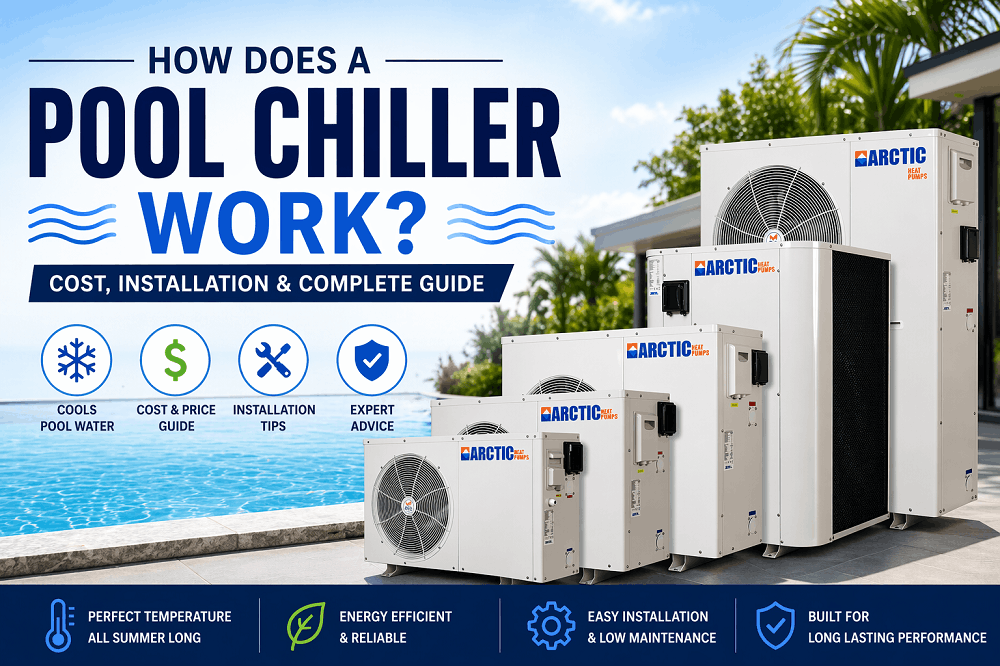
During the peak of the summer months, a swimming pool should be a cool and relaxing place. However, when the sun beats down relentlessly, your pool water can quickly absorb the heat, turning what should be a cool dip into an uncomfortable bath. This is where a pool chiller becomes an essential piece of equipment.
A pool chiller is a dedicated cooling system designed to lower the temperature of your pool water during hot weather. It works by removing heat from the water using an advanced refrigeration cycle and returning cooler, refreshing water back into the pool. This helps maintain a comfortable and revitalizing swimming experience, even in extreme heat.
Increasingly, modern pool owners are opting for hybrid HVAC solutions, using chillers alongside pool heat pumps to maintain the absolute ideal water temperature year-round, regardless of fluctuating ambient temperatures.
What Is a Pool Chiller?
In simple terms, if you are wondering what a pool chiller is, it is a specialized thermal management system that cools swimming pool water by extracting and displacing heat. Unlike traditional pool heaters that rely on gas combustion or electrical resistance to warm the water, a chiller reverses the process to ensure your pool stays cool and comfortable.
These systems are commonly used in a variety of settings:
- Residential pools in hot and humid climates where water temperatures can easily exceed 90°F (32°C).
- Commercial pools, resorts, and water parks that need to regulate temperatures for high volumes of guests.
- Therapy pools, athletic recovery centers, and cold plunges that require precise, cold water for muscle rehabilitation.
There are generally two types of pool cooling systems. One is evaporative coolers (which use fans to cool the water via evaporation) and mechanical heat pump chillers. Mechanical chillers use a closed-loop refrigerant system and are vastly superior in humid climates.
For a deeper look at high-efficiency mechanical systems, explore our extensive pool chillers collection.
How Does a Pool Chiller Work? (The Step-by-Step Refrigeration Cycle)
When asking, “how does a pool chiller work,” it is easiest to compare it to a central air conditioning unit or a refrigerator. It utilizes a mechanical refrigeration cycle, but instead of cooling the air inside your living room, it is specifically engineered to cool the water flowing through your pool’s plumbing.
Here is the step-by-step breakdown of the scientific process:
1. Water Intake and Filtration
The process begins with your pool’s primary circulation system. The pool pump draws warm water from the pool via the skimmers and main drains. This water is pushed through the pool filter to remove dirt and debris, ensuring that only clean water enters the delicate internal components of the chiller.
2. The Heat Exchanger (The Evaporator Coil)
Once the filtered water enters the chiller unit, it passes over a highly durable, corrosion-resistant titanium heat exchanger. Inside this heat exchanger flows a very cold, liquid refrigerant (such as eco-friendly R32). Because heat naturally transfers from warmer environments to cooler ones, the heat from the pool water is absorbed through the titanium walls into the liquid refrigerant.
3. The Compressor and Condensation Cycle
The liquid refrigerant takes heat from the pool water. This makes the refrigerant boil and turn into a warm gas. Then the gas is pulled into the compressor. The compressor squeezes the gas, which makes its pressure and temperature go up a lot. Next, this very hot gas moves into the condenser coil. A large fan at the top of the chiller blows cooler outside air over the coil. This takes the heat out of the refrigerant and pushes it out into the air.
4. Expansion and Cool Water Return
After losing its heat, the refrigerant turns back into a cold liquid as it passes through an expansion valve. Then it is ready to start the cycle again. At the same time, the pool water which had just had its heat removed. It is pushed out of the chiller and sent back to the pool. This water is usually 3 to 5 degrees cooler than when it first entered the chiller. Over several hours of nonstop circulation, the overall temperature of the whole pool goes down by a large amount.
This thermodynamic process is identical to the science behind how cold climate heat pumps work, just operating in a reverse cooling mode.
How Much Does a Pool Chiller Cost?
Cost is often the primary deciding factor for homeowners. If you are searching for how much is a pool chiller or how much does a pool chiller cost, you must account for both the initial equipment purchase and the professional installation, as well as ongoing operational costs.
Average Equipment Price Range:
The cost of the actual unit depends heavily on the BTU (British Thermal Unit) capacity, the size of your pool, and the technology inside the unit (such as variable speed or single speed).
- Basic models (Smaller pools/Spas): $2,000 – $4,000
- Mid-range systems (Standard residential pools): $4,000 – $7,000
- Premium, high-capacity inverter units: $7,000 – $10,000+
Installation Costs:
- Typical professional installation: Ranges from $500 to $2,500.
- This cost fluctuates based on whether you need to run new electrical wiring (such as a dedicated 220V breaker), how far the unit will sit from your equipment pad, and the complexity of the plumbing modifications.
Ongoing Energy and Operational Costs:
Running a mechanical pool chiller is generally very energy-efficient, especially if you utilize modern DC inverter technology. Depending on your local electricity rates and how many hours a day the unit runs, you can expect a monthly operational cost of $40 to $100 during the peak summer months.
Can You Add a Chiller to an Existing Pool?
One of the most frequently asked questions we receive is: can you add a chiller to an existing pool? The answer is a resounding yes. You do not need to be building a brand-new pool to enjoy the benefits of temperature control. A pool chiller can be seamlessly retrofitted into almost any existing pool plumbing setup.
Retrofitting Requirements:
- Compatible Plumbing System: The chiller is plumbed directly into your existing return line, typically placed after the pool filter and before any salt water chlorinators or chemical feeders.
- Plumbed Bypass Valve: An experienced installer will plumb a bypass manifold (using PVC valves). This allows you to control the water flow rate entering the chiller to ensure maximum heat transfer, and allows you to easily bypass the unit during winterizing.
- Adequate Electrical Setup: Most mechanical chillers require a dedicated 220V/240V electrical circuit. You may need an electrician to add a new breaker to your main panel.
- Space and Clearance: The unit needs a flat, level concrete or composite equipment pad with plenty of overhead clearance to properly exhaust the hot air it pulls out of your water.
Sizing Your Pool Chiller Properly
If you buy a chiller that is too small for your pool, the unit will run all day and night without ever reaching the temperature you want. This will increase your energy bills and cause the compressor to break down.
Chillers are sized in BTUs. The number of BTUs you need depends on:
- The total volume (gallons) of your pool.
- The surface area of the water (larger surface areas absorb more solar heat).
- Pool color (darker finishes absorb more heat).
- Environmental factors (screen enclosures, shading, and local ambient humidity).
To ensure you invest in the exact right capacity for your backyard, utilize our accurate heat pump sizing tool before making a purchase.
Pool Chiller vs. Heat Pump vs. Reversible Units
When shopping for pool temperature control, the terminology can sometimes be confusing. Here is a clear breakdown:
Feature | Dedicated Pool Chiller | Standard Pool Heat Pump | Reversible Heat Pump (Heats & Chills) |
Primary Function | Cools water only | Heats water only | Heats and cools water |
Best Climate | Tropical, extreme heat | Cooler, northern climates | Variable climates (hot summers, cold winters) |
Energy Use | Moderate | Highly efficient | Maximum efficiency |
Today, the most cost-effective and versatile choice for most homeowners is a reversible unit equipped with inverter technology. These advanced units allow you to set your exact preferred temperature, and the system will automatically decide whether to heat or chill the water to maintain that exact degree. You can learn more about the massive energy savings provided by pool heat pump inverter technology here.
Pool Chiller Installation Best Practices
Proper installation by a licensed HVAC technician or professional pool equipment installer is absolutely essential for maximum thermal efficiency and long-term performance.
Key Installation Tips:
- Location and Airflow: The chiller must breathe. Install the unit outdoors with at least 24 inches of clearance on all sides and 4 to 5 feet of open overhead clearance to prevent “short-cycling” (where the unit sucks its own expelled hot air back in).
- Equipment Pad Sizing: Secure the unit to an anti-vibration, level equipment pad to reduce operational noise.
- Plumbing Placement: Always install the chiller downstream from the filter to prevent debris from clogging the titanium heat exchanger.
If you are unsure where to begin with sizing or placement, we highly recommend reading our guide on choosing the perfect pool heat pump for your climate and pool size.
Maintenance and Longevity
Mechanical pool chillers are incredibly durable and built to withstand harsh outdoor elements. With routine maintenance, a high-quality unit can last 10 to 15 years.
Regular Maintenance Checklist:
- Keep Coils Clean: Regularly hose down the external evaporator fins to remove dust, grass clippings, and leaves. Blocked fins severely reduce the system’s ability to dissipate heat.
- Maintain Water Chemistry: Poorly balanced water (extremely low pH or high chlorine levels) can slowly degrade internal components.
Winterizing: If you live in an area that experiences freezing temperatures in the winter, you must completely drain the heat exchanger to prevent internal pipe bursts.
Conclusion
A pool chiller is one of the greatest investments you can make to guarantee your backyard remains a comfortable, refreshing escape during the hottest days of the year. By understanding the science of how it works, preparing for the cost, and ensuring a proper retrofit installation, you can extend your swimming season and dramatically improve your overall pool experience.
Don’t let the summer heat ruin your swim. Take control of your water temperature today.
Frequently Asked Questions (FAQs)
What is a pool chiller?
A pool chiller is a dedicated thermal system that cools swimming pool water by actively removing heat using a closed-loop refrigeration cycle and a titanium heat exchanger.
How does a pool chiller work?
It pulls warm pool water into the unit, absorbs the heat into a liquid refrigerant, uses a compressor to move that hot gas to an exhaust fan where the heat is blown into the air, and returns the newly cooled water back into the pool.
How much does a pool chiller cost?
Most high-quality residential pool chillers cost between $4,000 and $7,000 for the unit itself, with professional installation adding an additional $1,000 to $2,000 depending on plumbing and electrical needs.
Can I install a pool chiller myself?
While some advanced DIYers can handle the PVC plumbing, professional installation is heavily recommended. Wiring a 220V system carries severe safety risks, and improper plumbing can void your manufacturer warranty.
Is a pool chiller better than a heat pump?
They serve entirely different purposes-chillers cool the water, while standard heat pumps heat it. However, the best option on the market is a reversible unit that does both. For an all-in-one solution, consider a powerful Arctic titanium heat pump that heats and chills.